Friday, June 2, 2017

Will Virtual Reality Ever Be The Dominant Reality?


There have been numerous advancements in the world of virtual reality in the past few years. Almost every major media and gaming platform has introduced some type of virtual reality hardware. For instance, Samsung's Gear VR headset that allows you to put your Samsung phone in and enter the world of virtual reality, and even Facebook's Oculus Rift which has become one of the more high-quality systems in the realm of virtual reality.

Obviously, for gamers there are definite incentives for players to pick up a virtual reality set on whatever platform they chose, however, the issues lie in attracting people outside of the gaming realm. If virtual reality were somehow integrated into the daily lives of people around the world maybe in regards to their social media and calendars. The future of virtual reality may not be virtual reality at all. Meaning, augmented reality has made some serious grounds in the past year and a half due to the release of Pokemon Go. So, it may be that virtual reality isn't the logical next step in the technology realm of reality. 


If virtual reality is going to become the next major computing platform, I believe 2017 will be a very important year as platforms like Google’s Daydream, and whatever Oculus offers as the follow-up to Gear VR, need to arrive with the same explosion of marketing and branding that tethered VR was put through in the past year to even get it started. Finally, they need a compelling reason for those who don’t care about gaming to buy in, be that experiences like 360-degree video, or social platforms like those Facebook wants to build.

I Tried Tinder

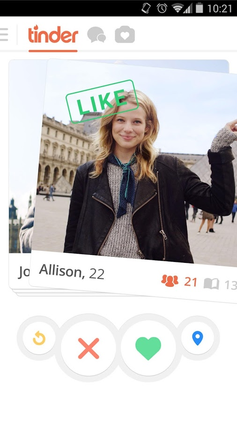
I have never previously used Tinder nor have I heard much about it. Although, due to the fact that much of the dating world has moved online and Tinder has increased in popularity, I wanted to see what the commotion was all about. After filling out the range in miles in which I wanted to connect with, putting in a few profile pictures, and putting in my biography information, I started on my Tinder journey. From the short time that I tried the dating app, I felt like it was a never ending cycle of swiping left or right depending on the attractiveness of the person that comes across your screen.


GOOD: Where the app really succeeds is its ability to create a place of communication between strangers that might not otherwise ever meet. If a person has a desire to meet as many people throughout their lifetime, Tinder would be an excellent starting place. The conversations were light and sometimes fun and wasn't as forced as the first face-to-face meeting of a person might be. Another really cool thing that Tinder offers that is the "Super Like" option. This allows a person, once a day, to "Super Like" and it then automatically notifies you that they have utilized this option in response to seeing your profile pictures; which cDO know from around the area in which I was using Tinder. This allows me the ability to see those who might be attracted to me and don't have the confidence to say so or those who just want to get to know you better.
an end up being very flattering to the ego. Furthermore, another thing I found pretty interesting is seeing and matching with the people that you

BAD:
Although there are many evident positives of the use of Tinder, I also found that there could be several potentially negative aspects as well. Because Tinder is so quick and easy (depending on your witty message ability) it seems it could make the overall dating scene more casual than some may think it should be. This ease of access may persuade more to continue to seek the short term commitment that Tinder provides. Another negative aspects that I discovered was that Tinder really reduces the value of meeting someone down to how they look. For instance, I connected with a gorgeous girl on Tinder and started messaging her. Needless to say, you won't know a person until you start talking to them.

Wednesday, May 31, 2017

Cell Phone Phenomenon: Have the Times Really Changed?

New or Recurring Issue?

Since around the time that I received my first cell phone, I have heard things like, "Stop burying your face in that phone" and "all kids do today is look at their phone." I, like many others, have become tired of the compiling arguments that all kids do today is focus on the phones they constantly carry with them. Now, because we as a younger generation are always buried within our phones, we have the ability to travel through the times and compile pictures that describe the "issue" that they are prescribing to our generation.


Although the medium has changed, has the behavior? I believe that, be it a thirst for knowledge or our constant need to be entertained and keep some certain area of the brain satisfied, people both young and old are always on the hunt for information. Newspapers were the medium of information on everything going on outside of people's personal lives and were used at the dinner table, walking down the street, in trains and planes; all in places that can be associated with people burying their heads in their phones.


All in all, this begs the question of whether things are really that different than the times before cellphones? Personally, I do not believe that there is a significant difference in the behavior exhibited by users of newspapers back in the day and cellphones throughout today's society. One could also make the argument that cellphones are bringing us closer together making it easier to connect with multitudes of people across the globe. Although I don't believe there to be that big a difference between the generations, it doesn't change the fact that the world is getting faster and although phones allow us the constant ability to stay updated, we must stay vigilante in our personal relationships as well. 

Friday, April 21, 2017

Trouble Falling Asleep @ Night?

Trouble Falling Asleep @ Night?


A 2011 study commissioned by the National Sleep Foundation found that 95 percent of Americans use some sort of electronic device within an hour of falling asleep at least once a week while another showed that 60 percent of Americans watch TV immediately before going to sleep "every night" or "almost every night" of the week. 

 The Science: 

Being a culprit of using electronic devices before going to bed, I did a research paper on the topic and learned the light the emanates from the screens you watch are full of blue LED lights. Now, this may seem obvious but such wavelengths in light aren't as common naturally and that blue light inhibits the production of melatonin, which tells your body that it's time to sleep. Once this occurs, you could effectively disrupt your bodies natural time-clock known as the circadian rhythm making it more difficult to fall asleep and possibly from entering into the deeper stages of sleep.

The Solutions:

  • You can dim the brightness of your devices or you can make use of programs that filter out short-wavelength light in the evening.
  • Using "reverse-print" text, where the text on your phone is lit and the background is dark. This would reduce the total light that comes from your phone and that you take in.
  • Avoid stimulating cell phone games before bed. Cell phones have been found to be more interactive and therefore more disruptive to the sleep cycle. 
  • Best and least popular answer would be to simply avoid your devices before going to sleep!

Friday, April 7, 2017

Disappearing Protections in New Media


    Congress recently sent the President proposed legislation that would destroy key online privacy protections, an action that could cause significant changes in the ways the internet is governed. In the party-line vote, Republicans removed companies such as Verizon, AT&T, and Comcast of the protections that limited what companies could do with costumer habits, app usage history, location data, and Social Security numbers[1].  


    In 2016, 273 million people belonged to either Verizon or AT&T [2], which means that the majority of United States cell phone users will have their information unwillingly handed over to and observed by these providers. Furthermore, incentives such as the $83 billion online advertising market provides more reasons and opportunities for providers to bank in on these loosened regulations. Because the regulations regarding internet history allow providers to observe one's interests and viewing habits, providers can tailor one's visit on the internet and predict what the user wants to see. This is all part of an effort to conjoin their internet providing services with the capabilities found in the advertising market. In an age where almost everyone is connected through the internet and has begun to use the internet in some form or another would be effected by this vote to loosen privacy regulations. Concluding, if the measure goes through and Trump signs the proposal, Internet providers will be released from the FCC's privacy regulations and would allow them to use personal data and browsing history to make billions in the advertising industry. 

[1] Fung, Brian. "Republicans Voted to Roll Back Landmark FCC Privacy Rules. Here’s What You Need          to Know." The Washington Post. WP Company, 28 Mar. 2017. Web. 07 Apr. 2017. 

[2] Dano, Mike. "How Verizon, AT&T, T-Mobile, Sprint and More Stacked up in Q2 2016: The Top 7 Carriers." FierceWireless. N.p., 15 Aug. 2016. Web. 07 Apr. 2017.
,